Systems for Systematic Markets

Insider @ NXFD
We publish working notes – what we tested, what broke, what held up, and what we changed. Less hype, more process: robustness, risk controls, execution details, and disciplined iteration.
Posts are for informational purposes only and reflect internal research and engineering notes. Nothing here is investment advice, a solicitation, or an offer of any financial service. See our Terms of Use, Privacy Policy, and Cookie Policy for full terms and risk disclosures.
-
Evaluating Trading Strategies Beyond Standard Metrics
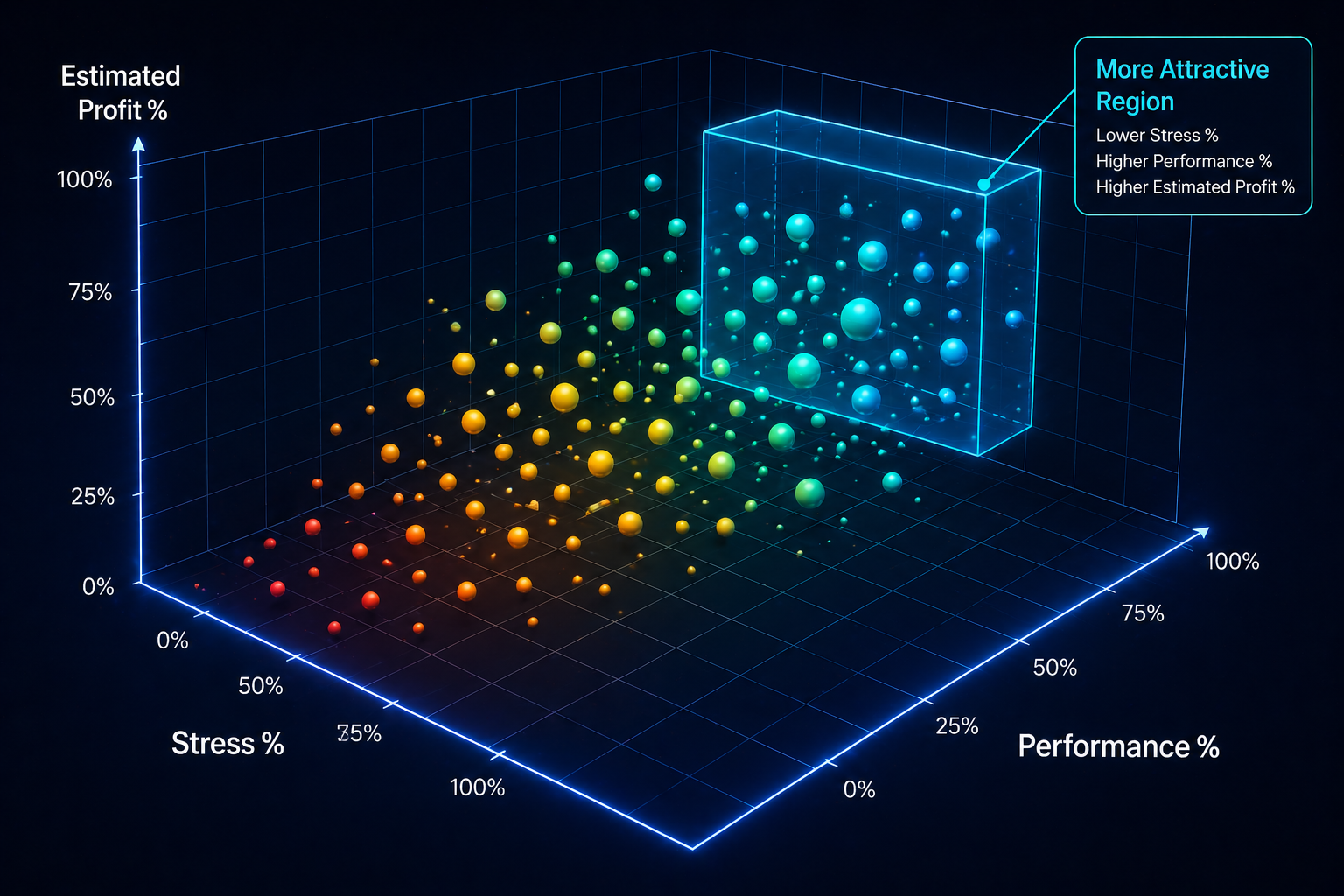
Most trading strategies are evaluated using a familiar set of statistics.Metrics like Sharpe Ratio, Sortino Ratio, Profit Factor, Maximum Drawdown, and Win Rate have become standard tools for comparing systems. These metrics are useful because they summarize important characteristics of…
-
From Backtest to Production: A Sequential Validation Workflow
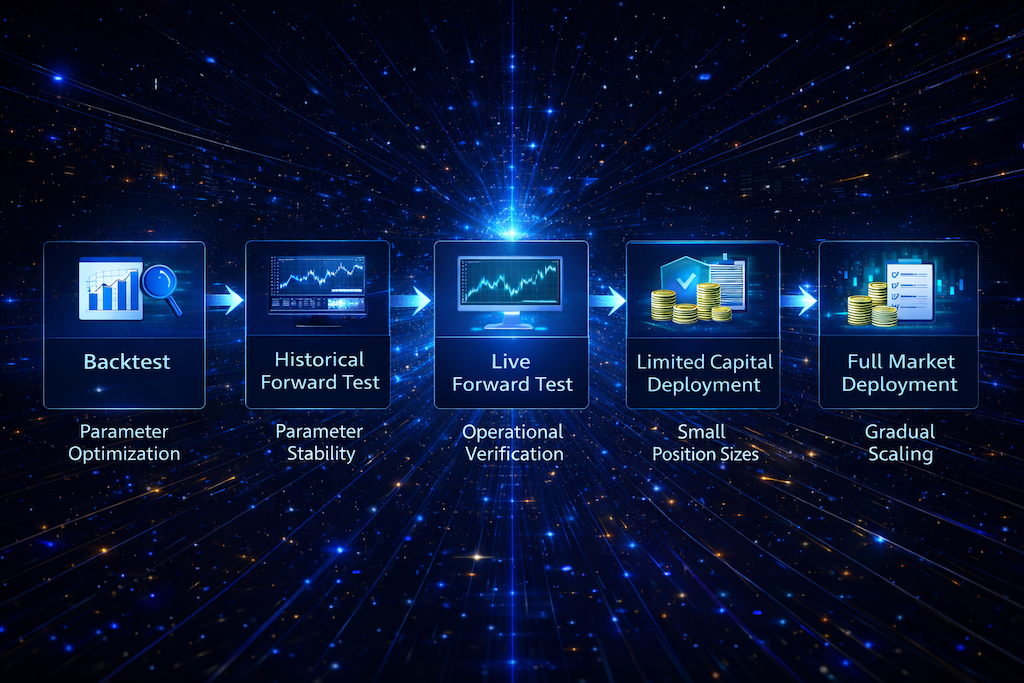
A backtest can show whether a trading idea might work. It cannot show whether the strategy is ready for production. Most strategies fail because the validation process stops too early. A system that looks stable in historical simulation may still…
-
Execution Reality: Slippage, Fees, Funding, and Adverse Selection

In trading, slippage is one of the most underestimated execution risks. Execution is where most strategies go to die. In research, execution is often a parameter. In production, it’s the environment. The same signal can look stable in simulation and…
-
The Backtest Isn’t the Strategy: Where Edge Disappears in Live Trading

A backtest is not a strategy. A backtest is a measurement under a set of assumptions – many of which quietly fail the moment you go live. In crypto spot and futures, the gap between a beautiful curve and a real system…
-
Research → Production: Our Workflow for trading Crypto

A trading idea isn’t useful when it’s interesting. It’s useful when it can be turned into a system that behaves predictably under real constraints. At NXFD, we treat research and production as a single loop. A hypothesis is not “done” when…
-
Why We Don’t Forecast (Much): Robustness > Predictions

Most trading content starts with a prediction. Ours usually starts with a constraint. Crypto spot and futures markets are noisy, reflexive, and regime-driven. The hard part isn’t producing a confident view – it’s building a system that survives when the…
-
What is NXFD Building (and what it’s not)
We’re NXFD (NEXFIND Dynamics), based in Dubai, U.A.E. This is the first entry on Insider @ NXFD – a place to publish the parts of the work that usually stay private: how we frame problems, how we test ideas, how we build systems…